Category: Life

Best Articles Collection About Life and Life Hacks

  • Supercharge Your Brain: How 6 Hats Method Changed My Life

    Supercharge Your Brain: How 6 Hats Method Changed My Life

    A Practical Guide to Transforming Ordinary Moments into Extraordinary Ideas

    During my business career, I’ve realized that sometimes I’m faced with difficult situations against to thinking from different perspectives for my tasks, problems and more…

    So, I was looking for sources and books to solve this problem. I was lucky, because in the beginning of my search, I found book that name is 6 Hat Techniques. Book mentions about simple and applicable techniques to think and look from different perspectives. Here below I’ll explain techniques with my point of view.

    “There has been enough knowledge in the WORLD. Now it is necessary to learn how to be creative using this information. You don’t have to be smart or clever to be creative. Knowing the method is enough.”

    These words belong to Edward de Bono, who said that in the age of thought, producing software for the human brain will become important, not for computers anymore.

    Edward de Bono, an international authority on creative thinking and the development of thinking as a skill, reveals the method of generating new ideas and being creative with the “6 Hats Technique”.

    Here is Edward de Bono’s “Thinking in 6 Hats”technique used in a management or team meeting to generate hundreds of new ideas in a very short time.

    How should you think?

    WHITE HAT (Information):

    Consider a computer that gives the necessary facts and figures when asked. The computer is neutral and objective.

    Does not comment, do not generate ideas. When he wears a white thinking hat, he thinks, he should imitate a computer. People who wear this hat should only focus on knowledge.

    RED HAT (Emotions, intuition):

    Those who wear this hat should reveal premonitions and impressions that are the opposite of objective knowledge. This hat may not be worn in serious business meetings.

    While instincts are not always right, they are a useful system of thought. The person wearing the red hat allows the thinker to say, “These are my feelings on the subject.”

    BLACK HAT (Critical judgment, pessimistic view):

    Like a judge’s hat, it predicts judgment, caution and risk assessment. Thanks to this hat, what could go wrong can be calculated in advance before starting a business.

    In fact, this hat is worn easily, sometimes more than necessary, since the emphasis is placed on discussion and criticism in Western societies. Politicians also wear this hat a lot to attract attention and make them feel important. It can be dangerous if used too much.

    YELLOW HAT (Optimism, being constructive):

    The yellow hat, symbolized by the color of sunlight and light, requires being sensitive like a 400-wrap film. Actually, this hat is very difficult to put on. It requires constructive thinking and making things happen.

    It focuses only on utility. Most people fail to see their values ​​in themselves and waste time. This hat serves to reveal these values.

    GREEN HAT (Creativity, sideways thinking):

    Green is the color of productivity and development. When this hat is put on, one must produce new ideas, new concepts, and new ways of perception. It must be creative. The alternative should offer more alternatives.

    Finally, change and new approaches to problems must be reached. Wearing a green hat helps in generating new ideas. For example, based on the suggestion that “cars should have square wheels”, a new car model was found suitable for potholes and bumps. It will be released soon.

    BLUE HAT (Control of thinking):

    Requires reflection on thinking, management of thought, organization of thinking, and control of other hats. The person wearing the blue hat does not drive the car but watches all the movements of the driver.

    He is both a choreographer who designed the steps and a critic who watches the play. With the blue hat, the person’s comments identify the issues to be considered.

    How will the hats be used?

    According to Edward de Bono’s method, during a meeting, each person at the same time puts on the blue hat first, revealing why they are meeting to hold meeting. Then they put on the red hat and express their feelings. Then they put on the white hat and present the information.

    By putting on the yellow hat, they can make a brief assessment. The aim is to get all the people attending the meeting to think in the same direction. Instead of wasting time by clashing opposing ideas, all thoughts of people are focused on a certain subject. The next speaker does not criticize the ideas of the previous one. He says new things.

  • “SMELL” — How They Rule Our Subconscious with the Secret Weapon

    “SMELL” — How They Rule Our Subconscious with the Secret Weapon

    Most of the time there is nothing we consciously do to remember the past

    Recently, I suddenly remembered a memory of something I did as a child that I was excited to do back then.

    We all have moments in our lives that come to us suddenly when we least expect it, even if many years have passed.

    From time to time, the reasons for recalling our memories can be different.

    Sometimes we can easily remember the past because we have experienced the same situation, and sometimes something else can remind us of the past.

    However, there is nothing we consciously do at that moment to remember the past.

    In our subconscious mind, there are many codings from the past that we are not aware of.

    Two events can suddenly come to our minds by making an association with each other, and similar emotional states can remind us of our past memories.

    In our daily lives, we are actually constantly exposed to certain emotional states by others without realizing it.

    These are emotions that we are not aware of and that are coded into our subconscious minds by others at certain frequencies.

    The simplest example is that many famous brands use special scents just to regulate the smell in their stores.

    They do not use these scents to sell to their customers.

    Their main purpose is to send a message to the customer’s subconscious by encoding their brand identity together with a beautiful scent.

    Especially when you enter the stores of elite brands, even if the stores are in very different locations, you always smell the same scent in the environment.

    I realized this with a memory I had.

    As you may know, there is a brand called Miniso, which is located in some shopping malls.

    It is one of the brands we usually visit because we love the product concept of the brand as a family.

    Recently, we went to a shopping center in the city where we live, but we don’t go very often.

    Since we don’t go very often, we were not familiar with the locations of the stores in the mall.

    We were trying to find a Miniso store to buy something we needed.

    Although we walked around the mall for a long time, we could not see the store.

    As we were walking along, I suddenly smelled a very familiar smell that I remembered from before.

    I remember saying to my wife.

    “Miniso’s store is very close by, you won’t believe it, but I can smell it”.

    My wife made the same comment and said yes, I smell it too.

    Even though we were paying full attention, we could smell a store that we couldn’t find.

    Isn’t that very strange?

    As we continued walking, as soon as we turned the first corner, we saw the store we were looking for right in front of us.

    It was at that moment that I realized how strongly scent is encoded in our subconscious mind.

    I immediately wondered if this was a secret marketing strategy of brands and wanted to analyze it by experiencing it myself before doing research in any source.

    The question I wondered was whether they were doing it on purpose or not.

    If they were doing it unknowingly, I started to think that this is definitely something that needs to be worked on.

    I thought that brands should create their brand’s fragrance identity with a fragrance designed specifically for them.

    I think this hidden power was working perfectly.

    I had experienced it myself and realized the power behind the scent.

    I then continued to observe, wanting to discover if it was just a coincidence or if it was intentional.

    The result was surprisingly the same and the same method was being used in many other elite brand stores I observed.

    Brands were entering our subconscious by using their special scents.

    Many of us may think that the ambient scents used in the stores we enter are only used to suppress the bad odor in the environment.

    Well, isn’t this a kind of subconscious hacking?

    Shouldn’t these brands, which inform us with a sign on the entrance door that our video recordings are taken with a camera, also declare to us that they encode our subconscious mind with scent?

    Because it is not written on the door of any store that we encode our brand into your subconscious with our special ambient scent that we use in our store.

    So I interpreted this as a kind of secret weapon.

    I wondered what else could be done about this kind of subconscious coding and I continue to make similar observations in my daily life.

    Each stimulus sent to our 5 sense organs in the environment is a secret coding method.

    If these are positive coding, there is no problem.

    But could this method also be used for negative and malicious purposes?

    Then I started to search for foreign sources on this subject.

    I share the translation of the first article I read in its original form below.

    Stores use the scent technique to create a pleasant and inviting atmosphere to create positive emotional reactions in customers, increase sales and build brand loyalty. By using the right scent, businesses can create a memorable experience that encourages customers to return.

    Yes, after doing some research, I saw this.

    What I detected by coincidence was actually something that was done consciously and professionally by brands.

    From now on, compare and interpret the scents you smell in different stores of the brands you visit.

    Realizing that they manage your subconscious mind with hidden power, interpret that moment after reading this article.

  • Why Do Smart Watch Users Suddenly Have Panic Attacks?

    Why Do Smart Watch Users Suddenly Have Panic Attacks?

    As a person who has experienced panic attacks in the past and overcome them on his own, my findings and suggestions

    On my last two trips, my flights were delayed for 2–3 hours due to people who suddenly had a panic attack just as the doors of the aircraft were about to close and take off. The worst part is to spend this time in the aircraft.
    As someone who has experienced panic attacks for a short time in the past, I have recently started to see that many people around me have problems due to panic attacks and sudden crises of the disease. I have even observed that their lives have become unlivable.

    I am sure that you know someone with similar complaints around you or you have surely heard of someone who has problems with this disease from someone close to you.

    Before moving on to the connection between smartwatch and panic attack and the findings I have noticed, I would like to briefly explain to you what a panic attack is as a definition.

    What is a Panic Attack?

    It is a sudden period of intense fear characterized by palpitations, sweating, trembling, shortness of breath, numbness, or a feeling that something bad is going to happen.

    The severity of the symptoms increases within minutes.
    Usually, an attack lasts about 30 minutes, but this can vary from seconds to hours.

    Fear of losing control and chest pain may also occur during the attack.
    Panic attacks do not cause any physical harm to the person.

    Source:https://en.wikipedia.org/wiki/Panic_attack

    My Own Experiences During Panic Attack Illness;

    About 4–5 years ago, I personally experienced most of the symptoms you read in the definition above.

    In that process, living with the fear of sudden crises as well as the fear of going into crisis again finishes all the concentration on life. Therefore, I know very well how bad the process is.

    Today, in addition to my findings about the connection between smartwatches and panic attacks, I would like to tell you about how I overcame this disorder without medication and doctor support.
    I hope that the methods I apply will help those who need and have problems.

    Advice for Panic Attack Sufferers;

    The simplest way to get rid of panic attacks during and before the crisis is not to talk about the disease in your daily life and not to think about the crisis.

    During the crisis, you also need to immediately switch your focus to other things.I have a simple suggestion that you can easily apply during panic attacks;
    If you make a phone call to a relative during a crisis, if you talk about something other than your panic attack and crisis, your attention will be distracted immediately and you will be seriously relieved.

    I know it is not easy to stop the crisis immediately, but if you want to overcome this problem on your own without medication and without the support of an expert, I think there is no other solution.

    This is a method that I found on my own and it works for me. Of course, you can consult a doctor according to the severity of your complaints and you can advance the process with the drugs and methods he will recommend.

    Believe me, I can start a panic attack crisis by focusing on myself for 5 minutes and then I can get out of the crisis immediately. I know very well how the brain starts and stops this process.

    While struggling with panic attacks, according to what I have seen both in myself and in my environment, the process proceeds as follows.I wonder if I will suddenly lose my balance and fall, or I wonder if I am having a heart attack with a high pulse by focusing on my heartbeat and feeling the palpitations deeply, I have pain and numbness in the back of my head, I wonder if I will have a brain hemorrhage, my left arm is numb, I will have a heart attack or stroke, etc. There are many ways of thinking.
    One of them can be seen alone or all of them can be seen in one person.
    Believe it all, your brain creates it all by itself. If you don’t think, nothing happens.

    You need to know this very clearly. If you are someone diagnosed with panic attacks;

    As explained in Wikipedia;
    Panic attacks do not cause any physical harm to the person.

    When you start to know this clearly and bring it to your mind, your attacks will be shorter and will disappear spontaneously after a while.
    I say this as someone who has personally experienced this disease and defeated it on his own.

    So you can trust me.

    What is the Connection Between Panic Attacks and Smartwatches?

    Let’s come to my important observation that I chose as the title of my article, As a personality, I have an incredibly observant nature. I always involuntarily make observations about events and human behavior.

    I have always wondered what kind of reactions and behaviors people exhibit under which conditions.

    I am also incredibly curious about technology.
    Since my secondary school years, since the 90s, software, computer, coding, etc. I always closely follow all innovations and developments in the field. I also experience the products closely by using them directly in my life.As you know, smartwatches have become seriously accessible in the last 4–5 years. It has also started to be used by an important mass.
    Since I am a curious person, I have used smartwatches from many brands (Samsung, Apple) since the first day.

    I even switched to a different model and brand every 8–12 months and closely examined the features of smartwatches of many brands.

    Since I am an amateur runner, I usually use my smartwatch to monitor my heart rate data during and after the activity and during the recovery process.

    The moment my panic attack started was as follows.
    I felt as if I was fainting after losing my balance slightly on a stretching ground. Afterward, I started to feel like I was going to fall and faint with the same feeling.

    Therefore, I am sure that my panic attack process is not related to the watches I use and the pulse rate, etc. measurements I take.

    Last week, I met someone who has been struggling with panic attacks for a long time. Apart from him, I remember that I have met and talked to at least 2–3 people in the last 3–4 months.

    After closely analyzing the behavior of the person I met last week, the following suddenly came to my mind.

    What are the Common Characteristics of People Who Use Smartwatches and Struggle with Panic Attacks?

    Shall I tell you the common feature of all the people I see around me?
    They all started using smartwatches a while ago. The panic attack complaint of most of them was also common as heart palpitations, high blood pressure, fainting sensation, etc.

    The traumas of watch users were high blood pressure, palpitations, heart attacks, and fears. These are the equivalents of measurements/values that you can easily obtain from the watch.

    These people did not experience fainting or falling fears as I did.
    Their fears were usually linked to the measurements they obtained from the watch.

    For example;

    Thought of a heart attack (receiving irregular ECG reports and measurements from time to time)

    High blood pressure (taking an instantaneous low or high blood pressure measurement from the watch)

    Palpitations in the heart (taking a high or low pulse measurement over the hour)

    While chatting with these people, they were often using their smart watches to measure the amount of oxygen in the blood, instant pulse heart rate, blood pressure, etc. depending on the features of the watches they were using.

    I immediately thought about my observation and asked myself the following.

    All of these people started to have panic attacks after a while after they started using smartwatches. Believe me, it is very unlikely that this is a coincidence. Because I know very well when my close acquaintances started using smartwatches and when the disease started.I interpret the situation as follows: These people did not normally know and measure pulse, blood pressure, and blood oxygen data. Only if they had a serious health problem, then the blood pressure would be measured with a blood pressure monitor at home or in the neighborhood or they would go to a nearby health institution and have it measured.

    So what are they doing now, whether they have complaints or not, as they come to their minds or not, the devices were automatically measuring out of their control.

    In the meantime, I am sure that these smartwatches have saved the lives of thousands of people and created awareness for the detection of many diseases at an early stage and the most accurate intervention.

    Conclusion

    My purpose in writing this article is to raise awareness about the need for society to use technology correctly and not to interpret data if they are not experts.

    As someone who closely follows and uses technology, I only wanted to write my thoughts about my own determination.
    There is no scientific evidence or explanation for any of my determinations.

    After all, we can think like this. I also used a smartwatch when I was experiencing panic attacks, but my disease did not occur after I started using a smartwatch. Mine suddenly lost my balance and fainted etc. It started by experiencing a feeling.

    Therefore, we cannot generalize this determination that if you use a watch, you will have a panic attack.
    I hope that one day in the future, a research or a scientific article will be written about this determination of mine and we will read the share of truth.I hope that what I have written and my determinations about panic attacks will be a guide for people who have this problem.

  • Why I am 100% Convinced Of Life Beyond Earth?

    Why I am 100% Convinced Of Life Beyond Earth?

    Life beyond earth – Harlow Shapley of Harvard University made an interesting series of calculations

    If life could first arise spontaneously from non-living matter on Earth, could it arise elsewhere in the universe? 

    Few scientists interested in the origin of organisms think that life is unique to our planet Earth. 

    Most of those interested in the origin of life believe that some form of life has arisen many times in many places. 

    Those who hold this view point out that the origin of life on Earth was not a necessary and unrepeatable event. 

    On the contrary, all the events now hypothesized and all the known characteristics of life appear to be capable of occurring within the general laws of the universe. 

    Indeed, some argue that conditions permitting, biochemical evolution and life are an inevitable consequence of the total evolution of matter in the universe.

    They argue that, given the infinite size of the universe, it would be inherently illogical to believe that life is confined to a small planet in a small solar system.

    However, the prospects for any form of life in our solar system that is different from that on Earth are slim. 

    A few years ago, Harlow Shapley of Harvard University made an interesting series of calculations on the probability of life outside the solar system.

     Shapley said that at least 1020 stars are visible with today’s telescopes (not counting those outside the field of view of our telescopes). 

    Most of these stars are binary stars orbiting in the same orbit. Because of the irregular gravitational forces and the extreme temperature cycle that this arrangement creates, life in these systems (binaries) is unlikely. 

    Even most single stars are too short-lived, too bright, or too dim. These many potentially suitable stars must also be devoid of planets.

    Shapley thought it would be reasonable to assume that at least one in every thousand stars has a planetary system (that’s 101 stars with a total of planets). 

    Given theories about the formation of the universe, any place where life formed should be roughly similar to Earth, at least in terms of its basic chemistry.

    Life could then only form on planets with an average temperature. The planetary systems of many stars may not have a planet with a suitable orbit. 

    Shapley argued that, as an average estimate, at least one in a thousand stars with planets has a suitable planet; this calculation gives a total of 1014 stars with at least one planet with a suitable temperature.

    However, for life to develop, it is not enough for a planet to have an average temperature. It also needs to be of a certain size to hold a suitable atmosphere. 

    If one out of every thousand planets with a suitable temperature also has a suitable size, that is a total of 10¹¹. Even if a planet has a suitable temperature and a suitable atmosphere, life may still not arise for many reasons. 

    Again, Shapley, using the average one-thousandth estimate, hypothesized that there are 10⁸ (one hundred million) planets on which life could arise. 

    Today’s biologists working in this field consider Shapley’s estimate too conservative. Today’s biologists argue that the number would be 10¹⁶ or more.

    Sources: 

    1974QJRAS..15…51B Page 51
    Edit descriptionadsabs.harvard.edu

    Case Files: Harlow Shapley | The Franklin Institute
    Introduction “Theories crumble, but good observations never fade.” – Harlow Shapley Early in his life, Harlow Shapley…www.fi.edu

    Galactic and extragalactic studies at the Harvard Observatory
    1. The facilities of the Harvard Observatory at its northern and southern stations have permitted a varied attack on…www.sciencedirect.com

  • Why the Titanic Sank and Secrets Behind Sank

    Why the Titanic Sank and Secrets Behind Sank

    Titanic Sank Contradictions between the True Story and the Scientific Story

    Many of us have heard and learned about the Titanic sank and disaster thanks to the famous 1997 film. The first film I ever cried watching.

    At that time, when I was only 16 years old, I watched this film and was fascinated by it. The film was released and I remember that the theatre was packed. This event affected me so much that my interest in the Titanic story has never faded. 

    At that time, I made a notebook by cutting and combining articles and photographs published in newspapers and magazines. I followed the story of Titanic with the excitement of a boy in love.

    However, now that I think about it, there is a fact that is often overlooked: Titanic is not just a love story. This ship is a management error, a natural disaster and an engineering disaster. I think we should go beyond the love story of a rich girl and a poor man and scientifically question how the Titanic could have sunk in such a simple way.

    Titanic is a passenger ship built in 1912. Titanic, the largest ship built at that time, was the largest ship of its era with a weight of 269,168 tonnes, a mass of 46,328 grostons and a capacity of 3,547 passengers. However, three critical mistakes were made during the construction of Titanic.

    Firstly, the mistake made during the design phase of the ship was the desire to make the magnificent staircase as magnificent as possible. Therefore, the structural integrity of the ship was pushed to its limits and the intermediate walls were built low to make more room for the stairs. 

    However, this design error resulted in the compartments designed to trap water, which should have been much higher than the water level, being only 3 metres above the water level. This caused the ship to take on water faster than it should have.

    The second mistake was made in the deck design. The number of lifeboats that the ship could carry was actually 64, but the designer Alexander Carlisle thought that so many lifeboats on the deck would create an ugly appearance and wanted the number of lifeboats to be reduced to 16.

    It was inevitable that the Titanic would encounter the iceberg as it travelled at speed. As the hours ticked by and the night progressed, the combination of not enough binoculars to attract the crew’s attention and errors in the communications room triggered the disaster. 

    Titanic was able to spot the iceberg at the last moment, but it was too late for her to manoeuvre. In order to avoid hitting the iceberg, the captain of the ship, Captain Smith, tried to stop the ship with all his might and tried to manoeuvre, but the iceberg rubbed against the right side of the ship and caused serious damage to its lower hull.

    At first, the ship’s crew and some passengers did not fully realise the seriousness of the collision. Some remained in bed, while others continued with activities on the ship’s decks. However, as the crew quickly realised the situation, an emergency alarm was sounded and passengers began to be evacuated.

    The crew tried to direct passengers to life rafts and boats, but the insufficient number of lifeboats on board was a major problem. The lifeboats on board could only carry half of the passengers, and even these were not utilised to their full capacity. This was a result of deficiencies in Titanic’s design and prevented the passengers from saving their lives.

    Calls for help were sent out and neighbouring ships were alerted. One of the nearby ships, RMS Carpathia, received Titanic’s call and moved to reach the scene as soon as possible. However, much time was required for the Carpathia’s arrival and Titanic did not have enough time to take on water and sink.

    The crew tried to rescue most of the passengers, but the lack of emergency planning and drills caused a huge mess. The lack of an orderly landing of lifeboats and boats led to some going empty and some not being used to their full capacity.

    As the right side of the Titanic began to sink into the water, panic among the passengers and chaos was inevitable. Women and children were prioritised for rescue, but these rescues were inadequate due to insufficient lifeboats. Many people fell into the icy water.

    Despair and terror gripped the ship as many fell into the icy water. The decks of the Titanic were filled with people desperately trying to survive. Captain Smith and the crew used their last hope to evacuate people from unsafe parts of the ship.

    However, time was running out fast. As the Titanic began to sink beneath the water, people hugged each other in desperation, prayed and said goodbye to their loved ones. That night, thousands of lives were lost to eternity.

    When the RMS Carpathia finally arrived on the scene, it began to rescue survivors. However, as rescue efforts were delayed and most of the passengers were exposed to freezing water, the number of survivors was very small. 

    The Titanic disaster claimed the lives of more than 2,200 people and the ship remains remembered as one of the greatest maritime disasters in history.

    This tragic event had a major impact on the maritime industry. International ship safety standards were raised and more stringent inspections were introduced. Measures such as emergency drills and increasing the number of lifeboats on board were taken.

    The Titanic disaster became a lesson and a reminder for humanity. The lives lost that night helped to increase awareness and precautions for the safety of sea travel. 

    Today’s ships have become safer and more reliable with the lessons learnt and improvements made from that terrible event.

    The Titanic was a great creation of human hands. Tragically, however, arrogance and overconfidence led to its sinking. 

    This disaster showed that people cannot underestimate the power of nature and must always be careful and prepared.

    Today, the Titanic disaster still arouses the interest and curiosity of many people. Personal artefacts, stories and research found on board keep memories of that night alive and tell people the human stories behind a great tragedy.

    Sources

    “Titanic: Sinking the Myths” — National Geographic Society

    “The Titanic: 100 Years Later — National Geographic”

    “Titanic: The Official Website”

  • Secrets of Sleep and Why We Sleep and Do Animals Sleep Too?

    Secrets of Sleep and Why We Sleep and Do Animals Sleep Too?

    Every day we spend a large part of our lives sleep.

    Why is sleep so important? Do animals sleep too? In this article, we will explore the mysteries of sleep and look at this topic from a different perspective.

    Sleep has an important place in human life. We spend approximately one third of our life in a state of sleep. A person who will live 90 years will spend 30 to 35 years sleeping.

    These statistics may seem quite surprising.

    But why do we sleep so much?

    Is it foolish to spend this time in a state of unconscious sleep?

    The importance of sleep can be explained by the fact that the brain needs rest and reorganisation. During sleep, the body carries out processes such as muscle repair, protein synthesis, tissue growth and hormone secretion.

    At the same time, the brain performs important functions such as learning, memory, problem solving, creativity, decision making, focus and concentration. Serious decreases in these functions can be observed in people who do not get enough sleep.

    Sleep is a phenomenon seen not only in humans but also in animals. Sleepiness shows similar characteristics in many animal species. For example, sharks swim against water currents and take short naps on the ground.

    In whales, half of the brain sleeps while the other half remains active. Birds can sleep in the air, even during long periods of migration. These are just a few examples of the diversity of sleep patterns.

    However, sleep doesn’t last the same amount of time for all animal species. While humans usually sleep for 8 hours on average, some animals can get by on less sleep.

    For example, brown bats spend 20 hours a day sleeping, while tigers sleep for 16 hours. Giraffes sleep for only 2 hours, while horses and donkeys can sleep for up to 3 hours.

    Sleep is a fundamental quality of animals and is essential for the healthy functioning of their bodies.

    The process of sleep is like a pitstop, where restorative and regenerative processes in the body take place.

    Sleep is vital not only for physical recovery and brain function, but also for our emotional and mental health. When we are sleep deprived, emotional balance can be disrupted, stress levels can increase and our mood can be negatively affected. Furthermore, lack of sleep can increase the risk of developing depression, anxiety and other mental health problems.

    Sleep also supports our immune system. During sleep, the body produces antibodies necessary to fight infections and allows immune cells to regenerate. Therefore, getting enough sleep is vital for a healthy immune system.

    However, sleep is not only important in terms of its duration, but also its quality.

    The process of falling asleep involves different stages, such as deep sleep stages and REM (Rapid Eye Movement) sleep. The regular and uninterrupted occurrence of these phases ensures that the body is fully rested and regenerated.

    It is also important to maintain sleep patterns. Going to bed and getting up at the same time every night regulates the body’s biological clock and improves sleep quality.

    In addition, a quiet, dark and comfortable sleeping environment is also necessary for a good sleep.

    In conclusion

    Sleep is a fundamental element of our health. Adequate and quality sleep is of great importance for re-energising the body and mind, strengthening memory and maintaining emotional balance.

    Therefore, paying attention to sleep hygiene and regulating our sleep habits are essential for a healthy and balanced life.

  • The secrets of Parallel Worlds, Time Travel and Crossing Gates

    The secrets of Parallel Worlds, Time Travel and Crossing Gates

    Science Fiction Concepts that Go Beyond Speculation and Discoveries that Challenge the Human Imagination


    Table of Contents

      ∘ The Concept of Gates and The Structure of The Universe
      ∘ Science Fiction and Gates
      ∘ Scientific Research and Possible Future Discoveries
      ∘ Human Interaction with Gates
      ∘ Parallel Universes and Multiple Gates
      ∘ Time Travel and Gates
      ∘ Conclusion


    The Concept of Gates and The Structure of The Universe

    Gates are one of the fundamental concepts that allow us to understand the structure of the universe. Classically, four Gates are considered to define space — three Gates (length, width, and height) and a fourth gate with the addition of time.

    However, modern theories of physics suggest that the universe is composed of more gates. Some theories, such as string theory, describe a universe with 10 or 11 gates.

    These extra gates are differently oriented-combinations of our physical universe and are considered to be gates that we cannot perceive.

    These gates are studied through mathematical modeling to help us understand the interactions of particles and the fundamental structure of the universe.

    How gates exist and interact in the universe is a subject of intense research by scientists. For example, string theory tries to explain how extra gates affect the fabric of space-time.

    According to this theory, gates can be twisted or wrapped in microscopic gates, causing them to be hidden from our perception.

    Experimental studies and mathematical modeling in these areas aim to provide more information about extra gates. However, the fact that we have not yet reached a completely clear understanding of gates remains an exciting area of scientific exploration.

    Science Fiction and Gates

    Science fiction works are a common platform for exploring themes related to gates. Authors use their imagination to explore transitions between different gates, parallel universes, and events that take place between gates.

    In these works, gates are often blended with fantastical elements, allowing our heroes to explore new worlds, time travel, and alternate realities.

    Science fiction writers encourage readers to think differently and stretch their imaginations as they explore the nature and interaction of gates and how humanity might interact with them.

    While gates in science fiction are often based on real scientific theories, authors use their imagination to take these theories further.

    Authors create their own fictional rules to answer questions such as how transitions between gates can be achieved, whether different physical laws apply in these gates, and how gates interact with each other.

    The theme of gates in science fiction excites readers, while at the same time blurring the boundaries between science and fantasy and opening up new ideas, possibilities, and limitless thinking.

    Scientific Research and Possible Future Discoveries

    Scientific research into gates is taking important steps toward understanding the structure and fundamental principles of the universe. Physicists are mathematically modeling extra gates using theoretical frameworks such as string theory.

    However, exactly how gates work and how they can be accessed is still not fully understood. In the future, with technological advances and more sensitive experiments, it may be possible to gain more knowledge in this area and perhaps even interact with gates.

    Possible future discoveries could radically change our understanding of gates. For example, the discovery of more gates could help us understand the different properties of energy and space-time.

    These discoveries could lead to the development of new technologies, revolutionizing areas such as more efficient communication, energy transfer, or data storage methods.

    However, it is important to remember that research into gates is still in its infancy and holds great potential for discovery. Future studies and experiments could lead to a deeper understanding of gates, perhaps revealing new worlds that we cannot now imagine.

    Human Interaction with Gates

    The topic of humans interacting with gates is one that has been present in different cultures and belief systems throughout the ages.

    Some meditation and yogic practices, consciousness-altering experiences, or methods such as astral travel have led people to believe that they can transcend gates or have experiences in different gates.

    In these experiences, people claim to be able to access different gates on a spiritual, mental or energy level.

    However, it is important to note that these experiences are purely personal and inner experiences and no scientifically validated evidence has been presented.

    The topic of interacting with gates is also often addressed in art, literature, and popular culture. Books, movies and music tell stories set in different gates, giving the reader and viewer the opportunity to push the boundaries of imagination.

    Such works encourage people to think about gates, explore the possibility of different realities, and question the idea that life can be confined to a three-gate world. Interacting with gates perhaps represents the human desire to explore and understand the mysteries of the universe.

    Parallel Universes and Multiple Gates

    Parallel universes and multiple gates is a concepts often used in science fiction. According to this concept, our universe is surrounded by many other universes or gates.

    Each parallel universe contains its own physical laws and realities. For example, in a parallel universe, history may have developed differently or people may have different abilities.

    This idea encourages people to use their imagination and explore the possibilities. However, the existence of parallel universes has not yet been scientifically proven and is based more on speculation. This is an area where we may learn more in the future as scientific research and theories advance.

    Parallel universes and multiple gates stimulate people’s curiosity and thinking skills. Stories involving characters living in different realities allow viewers and readers to participate in extraordinary experiences.

    This concept allows people to see different lives or options that they “wish” they had or dreamed of.

    At the same time, the idea of parallel universes makes people question their own lives and choices. It allows people to explore their potential, to observe themselves in alternative realities and to understand the existence of different possibilities.

    Time Travel and Gates

    Time travel and crossing gates allows people to explore the concept of traveling through history or across different gates.

    This topic is often explored in science fiction and popular culture. The idea of time travel makes it possible to change events or experience a different reality by traveling to the past or future.

    Similarly, traveling between gates offers the possibility to visit different realities, worlds or parallel universes. However, time travel and crossing gates has not yet been scientifically proven or practically realized. It is based more on speculation and stimulates people’s imagination.

    The potential implications and paradoxes of time travel and crossing gates are also striking. For example, how does an intervention in the past affect the future?

    Or if you intervene in your own past by traveling through different gates, what kind of reality will emerge in the future?

    Such questions form the basis of fascinating stories about time travel and gates.

    Exploring this topic allows people to question the nature of time, fate and alternative realities, and to expand their imaginations.

    Conclusion

    The subject of time travel and crossing gates is a subject that feeds human imagination and curiosity.

    These concepts, which are frequently addressed in science fiction works and popular culture, present the idea that alternate realities, parallel universes, and the alteration of the past or future are possible.

    However, these topics have not yet been scientifically proven and are based more on speculation. Nevertheless, research and ideas about time travel and gates inspire people to expand their imagination and try to understand the mysteries of the universe.

    Perhaps we will have more knowledge and understanding of these topics in the future. But for now, the topic of time travel and crossing between gates is an exciting one that continues to make us think, imagine and explore the possibilities.

    Sources

    1. “Parallel Universes and Interdimensional Travel” — National Geographic: https://www.nationalgeographic.com/science/article/parallel-universes-multiverse-theories-quantum-physics
    2. “Time Travel: Quantum Physics and the Nature of Time” — Scientific American: https://www.scientificamerican.com/article/why-physicists-want-to-re
    3. “Interdimensional Travel: String Theory and Extra Dimensions” — TED Talks: https://www.ted.com/talks/brian_greene_on_string_theory?language=en
    4. “Time Travel and Altering the Past: Science Fiction and Physical Paradoxes” — Space.com: https://www.space.com/21675-time-travel.html
    5. “Parallel Universes and the Nature of Time” — Live Science: https://www.livescience.com/62513-parallel-universes.html
  • How to Boost Your Intelligence and Brain Power with Chess

    How to Boost Your Intelligence and Brain Power with Chess

    Chess really adds skills to our brain such as strategic thinking


    I have been watching the world chess Championship nowadays and following it with excitement every day since last week.

    I learned to play chess from my father when I was 8 years old. 
    Then I started playing regularly with my cousin.

    I remember being eliminated in the semifinals of a chess tournament in middle school. After that, chess remained a fun hobby for me and I didn’t spend much time improving it.

    While watching the final of the ongoing world chess tournament, I realized that my interest in chess has increased again, and with the help of some resources and analysis, I planned to improve it by allocating 30 minutes a day.

    Chess really adds skills to our brain such as strategic thinking, quick decision-making, and thinking. I realize this myself and I have prepared this article to share with you the other benefits I have gained as a result of the research I have done below.


    Chess has been with us for hundreds of years, across countless cultures and historical periods. 

    A glimpse into the development of the game’s history opens a fascinating window into cultural evolution and takes our minds to distant lands and epochs.

    The exact origin of chess is a great mystery. There are few ancient texts that speak of its beginnings and even fewer chess pieces that remain as physical evidence of the game’s early existence. 

    But legends, theories, and opinions abound! Most historians believe it started in India, Persia, or China.

    But there is much we do know. The form of chess that eventually reached Europe was played in Persia about 1350 years ago when it was conquered by Muslim armies in the mid-7th century. 

    The game became very popular in the Muslim world and was carried throughout Islam in North Africa and eventually to Europe.

    Scientific research conducted by Japanese researchers by identifying the areas where chess players’ brain activity is concentrated has revealed that professional chess players use hidden parts of their brains to make their moves.

    Benefits of Playing Chess

    • Playing chess keeps young minds away from harmful habits.
    • It helps us to act in a planned manner.
    • It allows us to make fast and correct decisions.
    • It makes it easier for us to use and develop the brain we have.
    • It is useful in the positive development of our personality.
    • It instills a sense of self-confidence in the individual.
    • It prevents distraction.
    • It takes people away from a rote memorization mentality.
    • It has been observed that people who play chess have higher thinking, research, judgment, and interpretation skills.
    • It helps to work systematically, regularly, and disciplined.
    • It instills the spirit of perseverance and struggles in the face of failure.
    • It increases internal motivation.
    • Playing chess increases the sense of responsibility.
    • It is very useful for the development of memory.
    • It increases concentration.
    • Our brain cells are very useful for improving the speed of learning.
    • It teaches that some losses can be experienced in order to win.
    • It shows that there is more than one way to the goal.
    • Allows the development of visual intelligence
    • Increases success in mathematics and geometry.
    • Playing chess is extremely important for developing not only visual but also numerical and verbal intelligence.
    • Research in the USA has shown that chess is definitely an educational tool.

    Source: https://msutoday.msu.edu/news/2016/study-links-intelligence-and-chess-skill

  • What Is The Speed Of Saliva During A Sneeze?

    What Is The Speed Of Saliva During A Sneeze?

    The Claim That Sneezes Reach Speeds of 400–460 Kilometers Per Hour.


    Claim


    Does the speed of particles coming out of the mouth and nose during sneezing can exceed 400 kilometers per hour and reach up to 460 kilometers?

    What is the Reality?


    In most cases, the speed of the particles that the average person can eject during a sneeze is 4.5 meters per second, which is around 16 kilometers per hour. Depending on the size, gender, lung capacity, illness/health condition, and sneeze strength, this speed can vary.

    Origin of the Claim


    The belief that the speed of a sneeze can reach hundreds of kilometers per hour is based on indirect calculations made in the 19th and 20th centuries. 

    For example, mid-20th century calculations by the American scientist and hygienic engineer William F. Wells concluded that the speed of a sneeze could reach 360 kilometers per hour (100 meters per second). 

    However, these are based on an indirect measurement of the droplets that can be formed on a liquid surface by particles scattered by a sneeze. 

    This number (and other values such as speeds of 120, 150, and 200 kilometers per hour) became popular due to the widespread reporting of such indirect measurements, while modern techniques calculate speeds much lower than this.

    Information


    To date, a number of direct and indirect measurements of the sneezing rate have been made. The results of some of these measurements are compiled below.

    In a study conducted in 2013 with 6 subjects and high-speed cameras, the distance and duration of the sneeze were measured by projecting LED light on the sneezing area of the participants sneezing in front of a concave mirror and measuring the diffraction amounts and distances of this light. 

    In this study, it was observed that the particles coming out of the mouth during sneezing can reach a maximum speed of 4.5 m/s (16 km/h).

    In another study conducted in 2013, the sneeze speed was measured to be 6 m/s (21.6 km/h).

    In 2014, in sneezing experiments conducted with human participants, with machines that are analogs of experiments, and with theoretical methods, the speed of the particles coming out of the mouth was measured to be around 1 meter per second (3.6 km/h).

    In another 2015 study, it was observed that 3-centimeter particles were dispersed at a speed of 35 meters per second (126 km/h), while particles between 160 microns and 1 millimeter were dispersed at a speed of 14 meters per second (50 km/h).

    In 2016, it was measured that particles scattered during a sneeze are ejected at a speed of 1–8 meters per second (3.6–28.8 km/h).

    Of course, it should be noted that sneeze velocity is only indirectly related to how far the potentially disease-causing particles scattered by sneezing are spread. Sneeze velocity should only be seen as the average speed of the particles. It should also be remembered that particles of different sizes can reach different speeds and travel different distances.

    No matter how fast the particles leave the mouth, very small particles, such as aerosols, can be suspended in the air and carried for many meters.


    Sources:

    • L. Searing. The Big Number: 6 To 8 Feet — That’s How Far Germs Can Fly After You Sneeze Or Cough. The Washington Post
    • WebMD. Sneezing: Myths, Causes, And Surprising Facts. WebMD 
    • P. Bahl, et al. (2020). An Experimental Framework To Capture The Flow Dynamics Of Droplets Expelled By A Sneeze. Experiments in Fluids, pg: 1–9
    • J. W. Tang, et al. (2013). Airflow Dynamics Of Human Jets: Sneezing And Breathing — Potential Sources Of Infectious Aerosols. PLOS ONE, pg: e59970
    • H. Nishimura, et al. (2013). A New Methodology For Studying Dynamics Of Aerosol Particles In Sneeze And Cough Using A Digital High-Vision, High-Speed Video System And Vector Analyses. PLOS ONE, pg: e80244
    • L. Bourouiba, et al. (2014). Violent Expiratory Events: On Coughing And Sneezing. Journal of Fluid Mechanics, pg: 537–563. 
    • B. E. Scharfman, et al. (2016). Visualization Of Sneeze Ejecta: Steps Of Fluid Fragmentation Leading To Respiratory Droplets. Experiments in Fluids, pg: 1–9
    • L. Bourouiba. (2016). A Sneeze. Massachusetts Medical Society, pg: e15

  • How A Beautiful Red Dressing Gown Has Changed All of Our Lives

    How A Beautiful Red Dressing Gown Has Changed All of Our Lives

    The Diderot Effect or Domino Effect in Our Life and Consumption

    Many inventions and designs are the result of coincidence.
    The drop of an apple on your head or the purchase of a red dressing gown can change your life and the course of history.

    Now let’s take a detailed look at how a beautiful red dressing gown has changed all of our lives.

    Who is Denis Diderot?

    The Diderot Effect is named after the French philosopher and writer Denis Diderot.

    Living between 1713 and 1784, Denis Diderot was one of the most important figures of the Age of Enlightenment and a pioneer of the Romanticism movement.

    As the chief editor of the Encyclopedia, which was designed to educate and develop the public, Diderot played a major role in the development and socialization of 18th century intellectuals.

    Diderot, who wrote dozens of works during his lifetime, made many contributions to literature as well as philosophy.

    What is the Diderot Effect?

    The Diderot Effect, in short, is a concept used to explain that every new thing we buy encourages us to buy other new things.

    Why the ‘Diderot Effect’?

    Denis Diderot, in his essay ‘Regrets for my old dressing gown’, described the consumption dilemma he had fallen into.

    Since Diderot was the first person to talk about the consumption dilemma caused by buying things without needing them, this dilemma or cycle is called the Diderot Effect.

    Diderot’s Experience

    The story is told in two versions: One is that the dressing gown was a gift, the other that she bought it herself.

    The Russian Empress Catherine the Great bought the library of Diderot, whom she heard was having financial problems. She asked him to keep the library in his home and made Diderot her librarian, paying his salary for 25 years in advance.

    Diderot, who pays off his debts and becomes comfortable as a result of this help, buys an elegant dressing gown (or an elegant dressing gown is gifted to Diderot by a friend).

    When Diderot puts on the dressing gown, he thinks that the things in his house do not suit the dressing gown, that they are old and do not match the dressing gown. So he changes his desk, the pictures on the wall, his armchair. Soon he had replaced almost all the furniture in his house with new ones, but he was in debt again.

    Realizing his predicament, Diderot describes the impulse that drove him to buy things he didn’t need in his essay ‘Regret for my old dressing gown’.

    ‘Why didn’t I hide him? He was used to me and I to him… He hugged every curve of my body. The other one is stiff and starched, it makes me look bulky. But the old one met all my needs.I could wipe dusty books with its skirt. The lines on it spoke of literature, the writer, the working man. But now I have the air of a useless rich man. No one knows who I am. I wasn’t afraid to be clumsy in it. I went from being the absolute master of my old robe to the slave of the new one… Damn this precious garment I used to respect and admire. Where is my old, common cloth, modest, comfortable rag?… My friends, keep your old friends. My friends, beware of wealth touching you. Let my situation be an example to you. Poverty has its freedoms, wealth has its drawbacks… That’s not all, my friends. Look at the ravages of luxury, the consequences of ever-increasing luxury. My old robe was in harmony with the other junk around me. A wicker chair; a wooden table; an old bookcase with a few books; a few unframed, sooty engravings; a few pieces of plaster lifted into the air between these engravings, all this was in harmony with my old robe. Now everything is broken, harmony, unity and beauty are gone!’

    Diderot Completeness

    Every new object we buy does not harmonize with other objects in the place where it is located/used.
    In order to create harmony and integrity with the new object, it is desirable to replace other old and worn objects with new ones.
    The real impact and value of objects carry meaning and functionality within a whole (Diderot Integrity).

    The Importance of the Diderot Effect and the Gestalt Approach

    The Diderot Effect has an important place in cultural anthropology, psychology and sociology as it describes both the desire for shopping in all times and the current consumer frenzy.

    Let’s think about ourselves in the simplest way. We don’t want to use any clothes or items unless they fit the fashion, the era, a certain concept or our style. This is the Diderot Integrity.

    The Diderot Effect is when each purchase triggers each other, for a simple example, when we buy shoes, bags, buckles and jewelry to match our new dress, or even a new coat. We probably didn’t need the new shoes, bag and coat. The entire purchase was made without conscious thought, just to fit in.

    On the other hand, the cultural codes we adopt impose harmony and completeness. This, in turn, greatly influences or determines our willingness and behavior to buy and own. Because, consciously or unconsciously, we seek to acquire the whole.

    The human search for wholeness is in line with the Gestalt Principles put forward in the 20th century: Holism leads to a more meaningful and valuable outcome. As long as human beings do not attain wholeness, they feel incomplete and deprived. As a result, they strive to achieve wholeness.

    Two Dimensions of the Diderot Effect

    When a consumer buys a product, he or she buys new products related to that product to complete the whole.
    For example, a new house and new furniture, a new dress and new accessories, new clothes that we think are appropriate for that status after a promotion, etc.

    Avoidance of new purchases is also a secondary dimension. The person may also develop the behavior of not buying new products out of concern that it will disrupt the integrity.

    Two Assumptions of the Diderot Effect on Shopping Habits

    The products we buy are part of our character, they reflect our social status and identity. They complement our other purchases.
    We need to create a new group for the new product that we buy and that is not like what we had before. So we start buying other new products to complement the new product.

    How to deal with the Diderot Effect?

    In a world based on consumption, where having more, higher models, better and the ‘latest’ is a status indicator, we first need to change our mindset.

    We can ask ourselves some questions before shopping:

    Does the product I have meet my needs?
    Do I really need this product?
    What am I paying for?
    Creating the perception that you can buy ‘happiness, joy, energy, beauty, …’ with a product (selling a philosophy or lifestyle) is nothing new.

    Keep in mind that what you are buying is just an object. No object can make you a better, happier person or make you more loved and admired.

  • Imagine Tax Free Universe Everything Everywhere All at Once

    Imagine Tax Free Universe Everything Everywhere All at Once

    (Spoiler Alert)

    In recent years, the number of movies about the multiverse has increased exponentially, and most studios have found the secret to making more movies, creating universe after universe, production after production,

    Companies like Marvel and Disney, which are well-suited to this, have also made a lot of use of it. Not only is this a storytelling technique, it is also a marketing technique.

    In universes like Marvel’s, the multiverse promises that the movie will continue in the future and uses the audience’s attachment and familiarity with the universe to continue its cycle.

    Of course, it would be unfair to judge the entertainment industry solely on this market: there are other aspects of such films that shape popular culture that are worth discussing.

    Nevertheless, it is no wonder that Everything Everywhere All At Once (2022), a kind of parody-comedy about the proliferation of multiverse theory, which stands outside of these larger universes, was so popular.

    The film, which has received very positive reviews since its release, was directed by Daniel Kwan and Daniel Sheniert, the directors of the 2013 music video Turn Down For What and 2016’s Swiss Army Man.

    The film is extremely self-aware and uses multiverse clichés to the fullest in a self-referential way. What would it be like if there really were countless universes? The movie explores this question to the fullest and also explores the most absurd possible universes that come to mind.

    In one universe, people have sausage fingers and do everything with their feet; in another, our protagonist is a rock; all universes have collapsed into a black sesame bagel. 

    Our hero is the only one who can save the universe, but he is not a superhero. She is an aging Chinese immigrant woman with a monotonous routine, trying to pay her taxes, running a laundromat.

    Her escape from the mediocrity of her life will cost her dearly. When we start the movie, Evelyn is trying to understand the taxes she has to pay. Aren’t the processes we go through in our daily lives with bureaucracy, endless and circular, absurd to the point of being thrown into the multiverse?

    These processes, which prevent people from living a linear, natural life and make life difficult, which are far beyond being logical, which completely change the concept of time and make it vital, also allow them to be examined beyond their ordinariness.

    Being thrown into a multiverse with characters that exist in the ordinary of life, such as an immigrant running a laundromat in California, a bored woman working in the tax office, is a very entertaining experience, reminding us that we don’t have to get lost in this mediocrity.

    The film’s dynamic editing keeps up with the pace and variability of the narrative, keeping the audience glued to the screen. To be able to watch such a moving, funny and absurd movie in a theater after two years of missing movies so much, perhaps for this reason alone, elevates this production much higher than it already is.

    The acting of Michelle Yeoh, Ke Huy Quan and Jamie Lee Curtis carries the movie in the same way; these actors are very experienced and accomplished and undoubtedly carry the movie.

    The small details in the writing of the characters also prove that the film spends time on its characters without relying too much on the originality of its plot, and that the narrative is not just about shock value.

    The film’s references to Wong Kar-wai’s cinema underline its awareness of its own production process and its place in a certain history.

    Like Evelyn, everyone wants to believe that their life has not been wasted and that better things await them. It is very difficult to be content with what you have.

    Even though the film emphasizes appreciating what you have, your family, it is the very essence of cinema and the experience of watching a movie to imagine that life can be much more exciting and fun by getting lost in other universes.

    Sometimes watching a movie begins and ends with this feeling, even if the movie itself is difficult to understand or decipher.

  • 5 Guaranteed Easy Ways To End Your Fears Completely

    5 Guaranteed Easy Ways To End Your Fears Completely

    Please do not say “I have no fear” without reading the first article

    Do you have fears that affect your life and that you cannot overcome? If so, would you like to overcome these fears and be free from them?

    “Courage is not fearlessness, but the ability to face fear.”
    – John B. Putnam Jr.

    Please don’t say “I have no fears” without reading the first item below. It is likely that this is a hidden fear masked by denial that is keeping you from facing your fears. Know that fear is never a weakness. What weakness is living a life of fear?

    In this article, you will find 8 steps I use to overcome the fear that has proven effective in my own life. I hope these steps will help you too.

    1. Identify Your Fear


    The first step to overcoming fear is to clearly identify and accept what you are afraid of. Fear is such a thing that it does not reveal itself in its true form. On the contrary, it hides behind a mask, weaves a cover for itself, and sneaks into our lives unnoticed. 

    Our mind plays tricks on us, deflects us, and we think that it is not a fear but our own “preference” or personality structure. So we don’t realize that we have a real fear to overcome.

    Real Life Examples

    To give an example from my own life, everyone knows me as someone who expresses myself well. 

    In fact, although I express my thoughts easily, when it comes to emotions I find it difficult to express them, especially in close relationships. As you can see, it seems as if there is not a fear but a personality structure. 

    However, this structure did not emerge spontaneously. Some negative experiences or observations turned into fears and became deeply rooted. 

    So much so that these fears hid themselves behind a personality structure and took on the lofty mission of protecting me, restricting me from expressing my feelings. 

    Believe me, this is not a personality structure. It is a “fear”: “If I express my feelings as they are, I am afraid of being hurt, of being misunderstood, of losing the love of the other person. I am afraid that if I reveal my feelings, they will be abused.”

    Let me give another example. A close friend of mine has a very negative view of marriage. So much so that no matter how good her current relationship is, when the subject of marriage comes up, her feelings change and she wants to get away from that relationship. 

    On the tip of the iceberg, her logic tells her, “50% of marriages don’t work, marriage kills relationships, etc.” Habuki herself has never been married. So these thoughts are entirely based on other people’s experiences.

    When we dig a little deeper, we find that the real fear under the iceberg is the fear of losing his freedom. Because of this fear, she lives a lonely life, both emotionally and physically. 

    And perhaps depriving himself of the wonderful experiences he could have had. But if you ask her, it’s not because of fear, it’s because she prefers to live alone. And she defines this as freedom.

    2. Identify Your Paradigms


    The second step you need to take to overcome fears is to center the paradigms operating in the background of the mind. This is quite easy and you can do it right now. Take a pen and paper and write down whatever comes to your mind about the fear in question;

    What are your thought patterns about this fear?
    Are there any proverbs or idioms that you use in daily life that reinforce your fear? What are your negative memories about this fear? 

    Even if you have not experienced it yourself, if there is a story you have been influenced by, add it to your list.

    Write without thinking, just write. You don’t even need to form proper sentences. Let whatever is inside you come out in writing. You will then have a complete mind map of your fear.

    The other day I was reading Joe Vitale’s book, “How to attract money.” The first step he suggested was to identify the thought patterns about money. For this, he suggested the above method. 

    Until I applied this method, I was not even aware of my negative thoughts about money. On the contrary, I thought I had an extremely good relationship with money. 

    When I picked up a pen and paper, I realized what a negative mind map I had about money. How many obstacles I was putting in my way to earn money?

    To overcome fears, you have to clearly map out your mind map about them. Because this map will guide you on your way to victory.

    3. Change Your Paradigms


    You now have your mind map of the fear in question. So you also have the solution. Go through the items you have written down one by one and sort out which ones serve you and which ones don’t. Replace the items that you think no longer serve you with new ones. What you need to pay attention to here is that your new paradigm should be something you believe in, something you accept as reality. It should not give you the feeling that you are deceiving yourself.

    For example, let’s say you are afraid of loneliness and one of your paradigms is “no one wants to be with me for a long time, they will eventually leave me”. If you want to change this thought, cross it out and replace it with this: “I love, I am loved, it is my birthright to love and be loved.”

    It’s time to replace the old paradigms that have unconsciously settled in your mind with conscious awareness! Write your new thought patterns on a clean piece of paper and read them every day. Until they take root in your mind. If when you think of the old paradigms, they have no effect on you, but you think “what nonsense”, then the new ones are well established:)

    4. Conquer Your Fear in Your Mind First


    This step is very important. Perhaps one of the most important. Why? Because what you can’t even imagine in your mind, you can’t possibly do in real life. Know that everything you see around you was first imagined by someone. So, for something to be real in this life, it has to be real in someone’s mind.

    Visualize the situation in which you feel fear. But this time, see yourself as someone who conquers fear, not someone who gives in to it. For example, if you have a fear of heights, imagine looking down from the top of a tall apartment building. In the first stage of your imagination, imagine that you are firmly anchored and perfectly safe. As you get used to the situation, gradually let go of your bonds and feel that you can now look down comfortably. Even more exaggerated! Imagine growing wings, soaring through the sky like a bird and enjoying it immensely.

    5. Love your fear


    Yes, I know, this article sounds ridiculous. But don’t be prejudiced, because it plays a key role in overcoming fears. Why?

    Because this life is based on dualities that are opposite but complement each other. For example, black and white, day and night, light and dark, good and bad, etc. 

    So if one thing exists, its opposite must also exist. The reason why something exists is because its opposite also exists. For example, if there were no night, there would be no day. 

    Because if it were always daytime, we wouldn’t need to define it because it would be an immutable unity. We wouldn’t even be aware of it.

    Many people think that the opposite of love is hate. But this is not true. The opposite of love is “fear”. Look again at the things you fear. You will see that there is no love in it. 

    To overcome fears, you have to dissolve them in love. Whenever you feel fear, send love to the event, person or situation you are afraid of. Do this even if you don’t feel like it. Fear cannot exist where there is love, just as darkness cannot exist where there is light. The antidote to fear is love.

    Let’s go back to the example we gave at the beginning. Let’s take my friend who is opposed to marriage, and the basis of his thinking is the fear of losing his freedom. In fact, this person is in a relationship of mutual love. How can love and fear go together, you may ask? 

    The answer is very simple, because this person’s main fear is not marriage but the fear of losing his freedom. 

    In other words, he sees marriage as a trap and he has a great fear of this situation in which he thinks he will be imprisoned and restricted. It seems much safer to condemn oneself to loneliness and turn one’s back on love than to live in such a situation.

    The fear of confinement and restriction does not contain love. That’s why the fear is there. When love is sent to this fear, it melts. The eyes closed by fear open and the truth becomes clear. The realization develops that nothing can interfere with human freedom. Freedom comes from the soul of man. 

    No one can imprison one’s soul except oneself. The greatest prison is the prison of fear. You can imprison the body, but never the soul. The poems that flow from the souls of people imprisoned for years are the best proof of this.

  • Secrets To Living A Better Life Than Average People

    Secrets To Living A Better Life Than Average People

    I promise nothing will ever be the same again


    Table of Contents

      ∘ Setting and achieving goals
      ∘ Time management
      ∘ Health and wellness
      ∘ Personal development
      ∘ Relationships
      ∘ Finances
      ∘ Career development
      ∘ Giving back
      ∘ Spirituality
      ∘ Mindfulness and self-awareness


    Setting and achieving goals: 

    This could include advice on how to set achievable, measurable, and meaningful goals, as well as strategies for staying motivated and on track.

    Setting and achieving goals is an essential aspect of living a better life than average people. When you set clear and achievable goals, you give yourself a roadmap to follow toward success and happiness. 

    To set effective goals, you should make sure they are measurable, achievable, relevant, and time-bound. You should also break down larger goals into smaller, more manageable steps, and celebrate your progress along the way. It’s also important to stay motivated and focused on your goals, even when faced with challenges or setbacks. 

    This can involve seeking out support and accountability from others, setting aside dedicated time to work towards your goals, and finding ways to stay motivated and inspired. By setting and achieving goals, you can take control of your life and shape it in the way you want.


    Time management: 

    This could include tips on how to prioritize tasks, make the most of your time, and avoid procrastination.

    Effective time management is crucial for living a better life than average people. When you manage your time wisely, you can make the most of each day and achieve your goals more efficiently. To manage your time effectively, you should start by setting priorities and focusing on the most important tasks first. 

    You should also try to eliminate distractions and avoid multitasking, as it can be counterproductive. It can also be helpful to create a schedule or to-do list and to set aside dedicated blocks of time for specific tasks. It’s also important to build in breaks and allow for flexibility in your schedule, as this can help you stay energized and focused. 

    By managing your time effectively, you can get more done and have more time for the things that matter most to you.


    Health and wellness: 

    This could include advice on maintaining a healthy diet, getting regular exercise, getting enough sleep, and managing stress.

    Maintaining good health and wellness is an important aspect of living a better life than average people. When you prioritize your physical and mental health, you can feel your best and be more productive and resilient. 

    To maintain good health, you should aim to eat a balanced and nutritious diet, get regular exercise, and get enough sleep. It’s also important to manage stress effectively, as it can take a toll on your overall well-being. 

    This can involve finding healthy ways to cope with stress, such as through exercise, meditation, or talking to a trusted friend or professional. 

    In addition, it’s important to take care of your mental health by seeking help if you’re struggling with depression, anxiety, or other mental health issues. By taking care of your health and wellness, you can improve your overall quality of life.


    Personal development: 

    This could include advice on how to continue learning and growing as a person, as well as tips on developing new skills and talents.

    Personal development is a key aspect of living a better life than average people. When you focus on personal development, you can grow as a person and become the best version of yourself. 

    This can involve learning new skills and knowledge, setting and achieving goals, and working on becoming your best self. To support personal development, you should aim to be open to new experiences and perspectives, and be willing to take on challenges and try new things. 

    It can also be helpful to seek out mentors and role models and to surround yourself with supportive and positive people. 

    In addition, it’s important to be mindful of your thoughts and actions and to work on becoming more self-aware and self-accepting. By focusing on personal development, you can continue to grow and improve throughout your life.


    Relationships: 

    This could include advice on how to build and maintain strong, healthy relationships with friends, family, and romantic partners.

    Building and maintaining strong relationships is an important aspect of living a better life than average people. When you have supportive and positive relationships with friends, family, and romantic partners, you can feel more connected and fulfilled. 

    To build and maintain strong relationships, you should be open and honest with others, and be willing to listen and communicate effectively. It’s also important to be respectful and considerate of others and to be willing to work through conflicts and challenges. 

    In addition, it can be helpful to show appreciation and gratitude towards those you care about, and to make an effort to spend quality time together. By building and maintaining strong relationships, you can create a rich and fulfilling social network that supports you throughout your life.


    Finances: 

    This could include advice on how to budget, save money, and invest wisely.

    Managing your finances is an important aspect of living a better life than average people. When you have a handle on your money, you can feel more secure and in control of your life. 

    To manage your finances effectively, you should start by creating a budget that reflects your income and expenses. This can help you understand where your money is going and identify areas where you might be able to save. It’s also important to save money for the future, whether that means setting aside money for emergencies or investing in your long-term goals.

     In addition, you should be mindful of your spending habits and try to avoid overspending or incurring unnecessary debt. By managing your finances effectively, you can create financial stability and security for yourself and your family.


    Career development: 

    This could include advice on how to find and pursue fulfilling work, as well as tips on how to advance in your career.

    Pursuing a fulfilling career is an important aspect of living a better life than average people. When you enjoy and believe in the work you do, you can feel more motivated and fulfilled. 

    To pursue a fulfilling career, you should start by considering your strengths, interests, and values, and think about how you can use them to make a positive impact. It can also be helpful to seek out mentors and role models who can provide guidance and support. 

    In addition, you should be willing to continue learning and growing in your career and be open to new opportunities and challenges. By pursuing a fulfilling career, you can find work that aligns with your passions and goals, and that makes a meaningful contribution to the world.


    Giving back: 

    This could include advice on how to contribute to your community and make a positive impact on the world.

    Giving back to your community and making a positive impact on the world is an important aspect of living a better life than average people. When you contribute to causes that are meaningful to you, you can feel more connected and fulfilled. 

    There are many ways to give back, such as volunteering your time, donating money, or advocating for social issues. It’s important to find causes that align with your values and passions and to be mindful of the impact you want to make. 

    It can also be helpful to seek out organizations or opportunities that align with your skills and interests and to find ways to make a sustained impact. By giving back to your community and the world, you can create a positive and lasting difference in the lives of others.


    Spirituality: 

    This could include advice on how to find meaning and purpose in life, and how to cultivate a sense of connection to something greater than oneself.

    Finding meaning and purpose in life is an important aspect of living a better life than average people. When you have a sense of meaning and purpose, you can feel more motivated, fulfilled, and connected to something greater than yourself. 

    To find meaning and purpose, you should consider your strengths, values, and passions, and think about how you can use them to make a positive impact in the world. It can also be helpful to seek out experiences that are meaningful to you, such as through travel, spirituality, or personal growth. 

    In addition, you can find meaning and purpose through relationships and connection with others, by being there for those you care about, and by building a sense of community. By finding meaning and purpose in life, you can create a sense of direction and fulfillment that guides you through life’s challenges and joys.


    Mindfulness and self-awareness: 

    This could include advice on how to cultivate a state of present-moment awareness and self-reflection, and how to use mindfulness to improve your overall well-being.

    Mindfulness and self-awareness are important aspects of living a better life than average people. When you are mindful and self-aware, you can be more present in the moment and more attuned to your thoughts, feelings, and actions. 

    To cultivate mindfulness and self-awareness, you can practice techniques such as meditation, yoga, or journaling, which can help you focus your attention and become more present at the moment. It can also be helpful to pay attention to your thoughts and emotions and to try to observe them without judgment. 

    In addition, you can work on becoming more self-aware by engaging in activities that challenge you or help you learn more about yourself, such as through therapy, coaching, or personal growth workshops. By cultivating mindfulness and self-awareness, you can improve your overall well-being and make more conscious and intentional choices in your life.
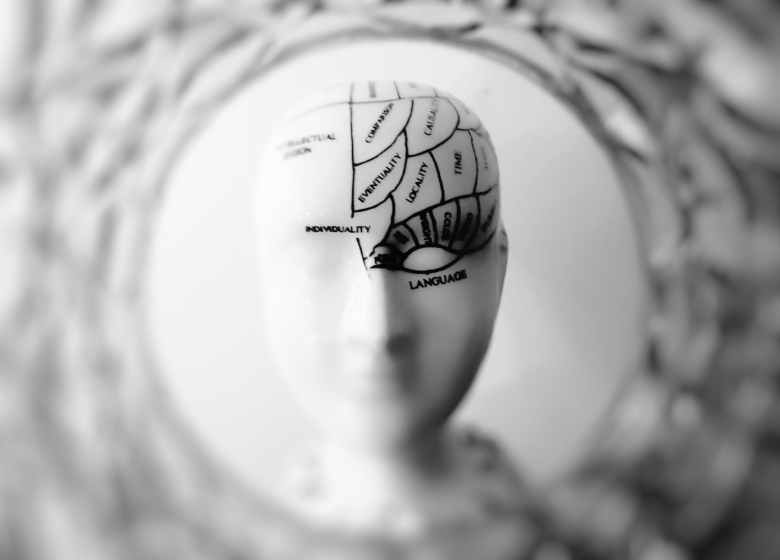
  • AI Answered; What Is The Meaning of Life?

    AI Answered; What Is The Meaning of Life?

    This article has been written completely by AI.


    The meaning of life is a question that has puzzled philosophers, theologians, and thinkers for centuries. It is a question that has been asked by people of all ages and from all walks of life. 

    Despite its apparent simplicity, the meaning of life is a complex and deeply personal question that each person must answer for themselves.

    At its core, the meaning of life is about finding a purpose or reason for existence. It is about discovering what gives our lives meaning and significance. 

    Some people find meaning in their relationships with others, while others find it in their work or hobbies. Still, others find meaning in their spiritual beliefs or in the pursuit of knowledge.

    One way to approach the question of the meaning of life is to consider the possibilities that exist for human beings. 

    We are capable of incredible things, from making great scientific and artistic achievements to forming deep, meaningful connections with others. We can learn, grow, and evolve, both as individuals and as a species.

    Given all of these possibilities, it is up to each person to decide how they want to live their lives and what they want to make of their time on Earth. 

    Some people may choose to focus on their careers, while others may prioritize their relationships or their personal growth.

    One common approach to finding meaning in life is to look for something that gives us a sense of fulfillment or happiness. 

    For some people, this may be found in their work or their hobbies, while for others it may be found in their relationships with others or in their spiritual beliefs.

    Whatever it is that gives us a sense of fulfillment, it is important to remember that this meaning can change over time. 

    As we grow and evolve, our priorities and interests may shift, and what once gave us a sense of purpose may no longer do so. It is important to be open to these changes and to be willing to adapt and seek out new sources of meaning and fulfillment.

    Another way to approach the question of the meaning of life is to consider our place in the universe. 

    We are just one tiny part of a vast and complex universe, and our individual lives are but fleeting moments in the grand scheme of things. In the face of this, some people may feel insignificant or unimportant.

    However, it is important to remember that even though our individual lives may be small in the grand scheme of things, we are still a vital part of the universe. 

    Our actions and choices can have a ripple effect, touching the lives of others and shaping the world around us.

    In this way, our meaning in life can be found in the impact that we have on others and the world around us. 

    Whether it is through our work, our relationships, or our contributions to society, each of us has the potential to make a difference and leave our mark on the world.

    Ultimately, the meaning of life is a deeply personal question, and each person must answer it for themselves. 

    Some people may find meaning in their relationships, while others may find it in their work or their hobbies. Still, others may find meaning in their spiritual beliefs or in the pursuit of knowledge.

    No matter what gives our lives meaning and significance, it is important to remember that we are all part of something larger than ourselves. We are part of a universe that is full of possibility and potential, and it is up to us to make the most of our time on Earth. 

    Whether we find meaning in our careers, our relationships, or our personal growth, it is up to each of us to discover what gives our lives meaning and to make the most of it.


    What do you think about the possibility of AI can write better articles than humans?

  • Tips To Becoming Successful and Achieving Your Life Goals

    Tips To Becoming Successful and Achieving Your Life Goals

    Achieving success in life is a goal that many people strive for, as it can provide a sense of fulfillment and satisfaction. 


    Table of Contents

    ∘ #1-Define success for yourself
    ∘ #2-Set goals
    ∘ #3-Work hard and be persistent
    ∘ #4-Continually learn and grow
    ∘ #5-Build strong relationships
    ∘ #6-Take care of your physical and mental health
    ∘ In Conclusion


    What does it really mean to be successful, and how can you achieve it? 

    Here are some key steps to take on your journey toward success:

    #1-Define success for yourself

    The first step to achieving success is to define what it means to you. Success means different things to different people, and it’s important to identify what you consider to be successful in your own life. 

    This might include achieving a certain level of financial stability, reaching a certain level of career success, or achieving personal goals such as getting married or starting a family. Take some time to think about what success means to you, and then use this definition to guide your actions and decisions.

    #2-Set goals

    Once you have a clear idea of what success means to you, the next step is to set specific, measurable, attainable, relevant, and time-bound (SMART) goals to help you achieve them. 

    Setting goals can help to give you direction and focus, and can provide a sense of accomplishment and motivation as you work towards achieving them. 

    When setting goals, it’s important to be realistic and to break them down into smaller, manageable steps. This will make it easier for you to track your progress and stay on track toward achieving your goals.

    #3-Work hard and be persistent

    Achieving success in life requires hard work and dedication. This means putting in the time and effort necessary to achieve your goals, even when it’s difficult or challenging. 

    It’s also important to be persistent and never give up, even when faced with obstacles or setbacks. 

    By staying focused and determined, you can overcome any challenges that come your way and continue to make progress toward achieving your goals.

    #4-Continually learn and grow

    Success is not a static state — it’s a continual process of learning, growth, and self-improvement. 

    To achieve success in life, you need to be open to new experiences and opportunities, and to be willing to learn and grow. This might mean taking on new challenges, pursuing further education, or developing new skills and expertise. 

    By continually learning and growing, you can stay at the top of your game and continue to move forward toward achieving your goals.

    #5-Build strong relationships

    Success in life is not just about achieving personal goals — it’s also about building strong relationships with others. 

    Having a supportive network of friends, family, and colleagues can provide valuable guidance, support, and opportunities for collaboration. 

    By building strong relationships, you can tap into the collective knowledge and expertise of those around you and can benefit from their support and encouragement as you work towards achieving your goals.

    #6-Take care of your physical and mental health

    In order to achieve success in life, it’s important to take care of your physical and mental health. 

    This means eating a healthy diet, getting regular exercise, and getting enough sleep. It also means managing stress and taking time for yourself to relax and recharge. 

    By taking care of your physical and mental health, you can ensure that you have the energy, focus, and resilience necessary to achieve your goals.

    In Conclusion

    Achieving success in life requires setting goals, working hard, learning and growing, building strong relationships, and taking care of your physical and mental health. 

    By following these steps, you can work towards achieving your own definition of success and lead a fulfilling and satisfying life.